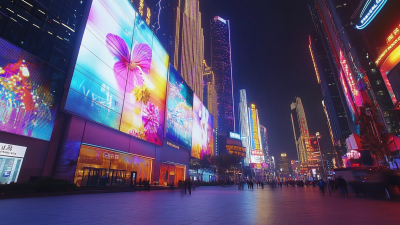
Top Quality Led Light Street Solutions for Global Buyers?
In today's world, LED light street solutions are gaining traction among global buyers. These solutions offer energy efficiency and longevity. Urban planners and municipalities face challenges in selecting the right lighting options. The growing demand for sustainable and cost-effective street lighting systems drives innovation in this sector.
LED light street fixtures provide important advantages over traditional lighting. They consume less energy and reduce maintenance costs. However, not all products in the market meet quality standards. Buyers must be cautious and conduct thorough research when making a selection. Some options promise high performance but may lack durability and efficiency.
The landscape of LED light street technology is ever-evolving. New materials and designs emerge regularly. While many products offer compelling features, some fall short in real-world applications. It's essential to critically evaluate these solutions and reflect on the long-term benefits versus initial costs.

Top LED Street Lighting Solutions: Industry Overview and Trends
The global LED street lighting market has seen significant growth. According to a recent report by MarketsandMarkets, the sector is expected to reach $22.27 billion by 2026. This growth is driven by rising energy demands and the push for sustainability. Cities worldwide are transitioning from traditional lighting to energy-efficient LED solutions. These systems not only reduce energy consumption but also lower maintenance costs.
Trends show a growing interest in smart street lighting, integrating IoT technologies. This allows for enhanced control and monitoring. Smart systems can adjust brightness based on environmental conditions or pedestrian movement. According to ResearchAndMarkets, the smart street lighting segment is anticipated to grow at a rate of 23.9% between 2021 and 2026. Governments are increasingly funding smart solutions to improve urban infrastructure and reduce carbon footprints.
Tip: When selecting LED street lighting, consider the color temperature. Warmer lights (3000K) can enhance visibility and safety in urban areas. Balance energy savings with community needs. Not every location may benefit from the same lighting solutions, highlighting the need for customizable options. Analyzing specific needs is crucial for optimal results.
Benefits of LED Street Lighting: Energy Efficiency and Cost Savings
LED street lighting provides significant benefits, particularly in energy efficiency and cost savings. These lights consume less energy compared to traditional street lights. This means reduced electricity bills for municipalities. The longer lifespan of LED lights also decreases maintenance costs over time.
Many cities have switched to LED street lights. They noticed a sharp decrease in energy usage. Some reports indicate up to 50% savings. This shift not only helps local budgets but also benefits the environment. With reduced energy consumption, greenhouse gas emissions are lower. However, the initial costs can deter some cities from making the change.
Implementing LED street lighting requires careful planning. Cities must consider the layout and light distribution to maximize effectiveness. In some cases, poorly designed installations may lead to dark spots or uneven lighting. This highlights the importance of skilled professionals in the decision-making process. Sustainable lighting solutions are crucial, but the transition must be well-executed to truly reap the benefits.
Top Quality Led Light Street Solutions for Global Buyers - Benefits of LED Street Lighting: Energy Efficiency and Cost Savings
| Country |
Annual Energy Savings (kWh) |
Estimated Cost Savings ($) |
CO2 Emission Reduction (tons) |
LED Lifespan (years) |
| United States |
1,200,000 |
240,000 |
1,100 |
15 |
| Germany |
800,000 |
160,000 |
700 |
20 |
| China |
2,500,000 |
500,000 |
2,200 |
10 |
| India |
1,000,000 |
200,000 |
900 |
12 |
| Brazil |
600,000 |
120,000 |
550 |
8 |
Key Factors in Selecting Quality LED Street Lighting Products
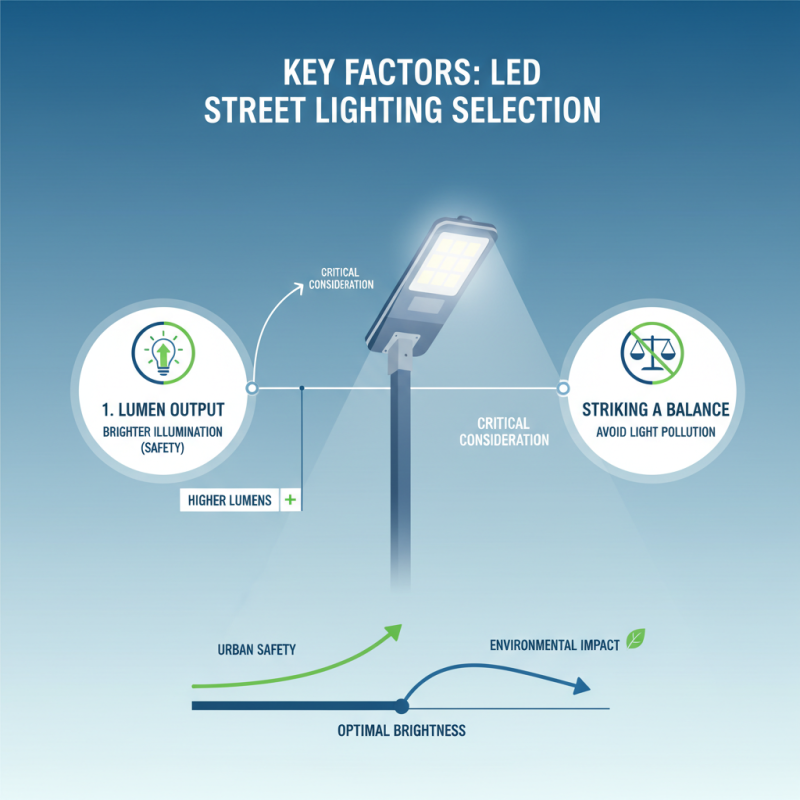
When selecting LED street lighting products, key factors come into play. First, consider the lumen output. A higher lumen value means brighter illumination. This is critical for safety in urban areas. However, excessive brightness can lead to light pollution, so striking a balance is crucial.
Another important aspect is energy efficiency. LED lights typically use less power compared to traditional lighting. Look for products with high efficacy ratings. This contributes to long-term savings and reduced environmental impact. However, not all energy-efficient options are created equal, and some may not perform well in harsh conditions. Testing real-world performance is essential.
Durability is also a significant factor. LED fixtures must withstand various weather conditions. Check the ingress protection (IP) rating to ensure resistance against dust and water. An IP rating of at least 65 is ideal. However, some products may suffer from premature failures under extreme weather, so case studies are essential to assess reliability. Choose wisely to avoid costly replacements.
Global Market Analysis: The Growth of LED Street Lighting Solutions
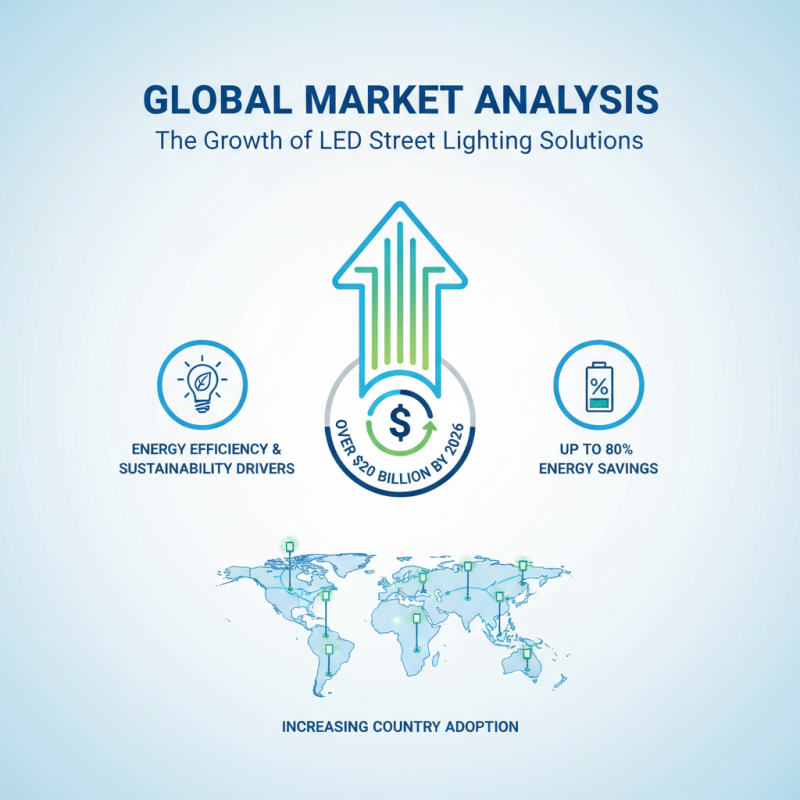
The global market for LED street lighting solutions is experiencing rapid growth. A recent report estimates that the sector could reach over $20 billion by 2026. Countries are increasingly adopting LED technology for street lighting, driven by energy efficiency and sustainability concerns. LED lights offer up to 80% energy savings compared to traditional fixtures.
Cities are setting ambitious goals to reduce carbon footprints. By 2025, 40% of street lighting is expected to be LED. This shift not only benefits the environment but also reduces maintenance costs. A smart lighting approach is emerging, integrating sensors and controls. This enhances efficiency and provides real-time data for city planners.
Yet, challenges remain. Many municipalities lack the funding for a full transition. Training staff to handle new technology is crucial. There's also an ongoing need for standardized solutions. Collaboration among stakeholders is necessary to address these gaps. The path forward is promising, but requires careful planning and investment.
Case Studies: Successful Implementations of LED Street Lighting Globally
Cities worldwide are transitioning to LED street lighting. This change is often driven by the need for energy efficiency and sustainability. For instance, a case study in a mid-sized city showed a 60% reduction in energy consumption after the shift. The new lights provided brighter, more uniform illumination, improving safety on the streets.
Another example comes from a large metropolitan area that replaced its traditional streetlights with LED fixtures. This project was completed over two years. Initial investment yielded long-term savings. However, the implementation faced challenges like initial resistance from local communities. Some residents were concerned about light pollution and the perceived harshness of LED lights. Open forums were held to discuss these concerns, demonstrating the importance of community engagement.
Successful LED street lighting projects must consider design and community feedback. Adapting to these needs leads to better outcomes. While the benefits are clear, continuous evaluation is needed to ensure alignment with community values. Future projects will benefit from lessons learned during these implementations.
Comparison of LED Street Lighting Energy Savings