China Top 10 Digital Signage LED Wall Manufacturers
China’s digital signage LED wall industry has moved from simple display supply toward complete visual communication systems. Manufacturers now compete on pixel precision, cabinet design, brightness control, installation support, and long-term service. A vivid wall may attract attention, but stable performance keeps audiences watching.
This guide examines China’s top 10 digital signage LED wall manufacturers through practical, buyer-focused criteria. We consider product quality, factory experience, indoor and outdoor applications, maintenance access, energy efficiency, customization, certifications, and customer support. We also look beyond impressive showroom videos. Real projects reveal more: a retail wall facing sunlight, a control room requiring continuous operation, or a narrow lobby needing front-service cabinets.
Digital signage expert Dave Haynes has often emphasized a simple principle: “Content is king.” The display supports the message; it cannot rescue weak content or poor planning. That insight matters when comparing LED suppliers. A manufacturer may offer excellent modules but lack reliable calibration, spare-parts planning, or regional technicians.
No ranking is perfect.
Market data changes. Product lines change faster.
Therefore, this selection should support further verification rather than replace it. Buyers should request current test reports, project references, warranty terms, refresh-rate data, and detailed power specifications. They should also inspect color consistency from different viewing angles. Small gaps become obvious on large walls.
The companies below represent different strengths, including engineering depth, export experience, rental and fixed-installation solutions, and custom project capability. Some may be stronger for premium corporate environments; others may suit transportation hubs, shopping centers, education spaces, or outdoor advertising. The best digital signage LED wall manufacturer is not always the largest one. It is the supplier that matches technical needs, operating conditions, budget, and after-sales expectations.
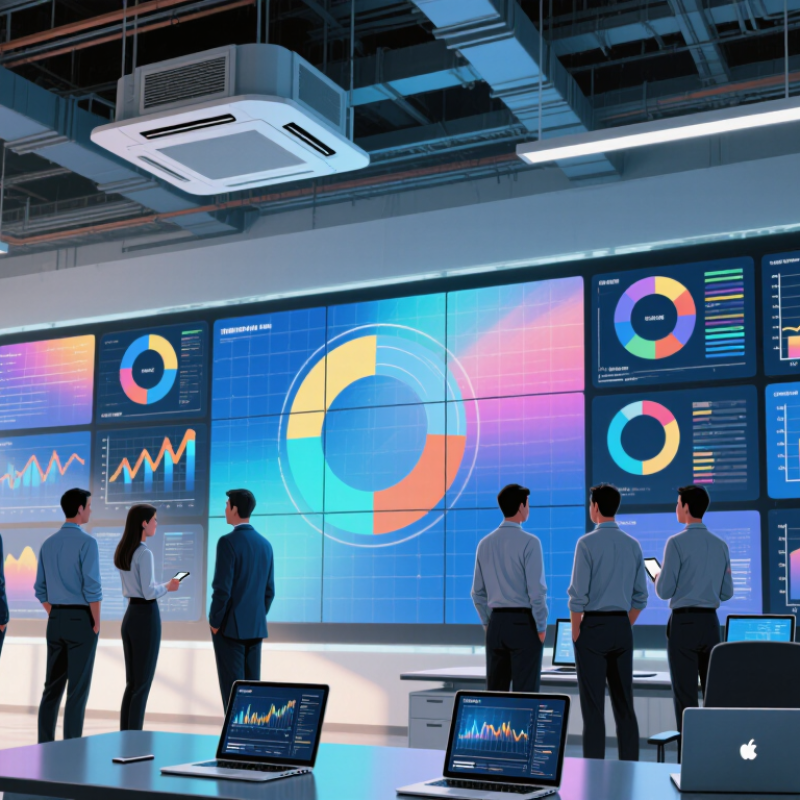
China’s LED Wall Industry: Market Scope, Standards, and Key Technologies
China’s LED wall industry serves retail, transport, studios, control rooms, and outdoor advertising. Its market scope is broad, but project requirements differ sharply by location, viewing distance, and operating hours. A shopping mall may prioritize fine pixel pitch and quiet cooling. A stadium needs brightness, weather resistance, and long-distance visibility.
Reliable procurement begins with standards, not attractive specifications. Indoor and outdoor products should be checked for electrical safety, electromagnetic compatibility, structural loading, and suitable IP protection. IEC safety requirements may apply to the complete equipment, while local Chinese standards can govern testing, installation, and energy performance. Buyers should request test reports, calibration records, module tolerances, and warranty terms. A certificate alone proves little.
Key technologies include SMD and COB packaging, high-refresh driving, front-service modules, automatic brightness control, and cabinet-level calibration. Fine-pitch walls can deliver smooth images, yet they expose uneven assembly more easily. Thermal design matters too. A bright wall generates substantial heat, especially under direct sunlight. Field inspection should include dead-pixel checks, grayscale viewing, power measurements, and cable redundancy. Small details matter.
Some specifications remain difficult to compare. “High brightness” is not meaningful without measurement conditions. “Seamless” may still reveal alignment errors at close range. Procurement teams should test a sample cabinet for several days before approval. The industry is advanced, but quality consistency still deserves cautious review.
How to Rank China’s Top 10 Digital Signage LED Wall Manufacturers
Ranking China’s top ten digital signage LED wall manufacturers requires more than comparing pixel pitch or factory size. Grand View Research valued the global digital signage market at approximately USD 27 billion in 2023 and expects continued growth through 2030. This growth makes supplier selection more demanding. A credible ranking should examine manufacturing capacity, product consistency, energy efficiency, certifications, and export experience. Proof matters.
I would assign 25% to display performance, including brightness stability, color uniformity, refresh rate, and viewing distance. Another 20% should measure reliability through burn-in testing, failure rates, protection ratings, and warranty records. The remaining score can cover engineering support, project delivery, spare-parts availability, customization, and transparent pricing. Factory audits should verify production equipment, quality-control procedures, and sample-to-batch consistency. A polished showroom is not enough.
Industry reports from MarketsandMarkets and Omdia indicate strong demand for fine-pitch LED displays in control rooms, retail spaces, transport hubs, and corporate environments. Therefore, ranking models should distinguish indoor and outdoor applications rather than use one universal score. Customer references should include installation age, maintenance frequency, and actual operating conditions. Numbers can mislead. One weakness remains: public data rarely reveals long-term failure rates. I would publish the scoring method, preserve audit evidence, and update rankings when field performance changes. A lower-priced supplier may deserve a higher position if it delivers stable brightness, faster service, and fewer replacement modules over five years.
How to Rank China’s Top 10 Digital Signage LED Wall Manufacturers
This brand-neutral scorecard uses practical procurement dimensions for comparing manufacturers. Product reliability and image performance receive the highest weighting because they directly affect long-term signage operation and viewing quality.
The total weighting equals 100 points. Buyers can score each manufacturer against documented specifications, test reports, project references, service coverage, compliance records, and total ownership cost.
Top 10 Manufacturers by Pixel Pitch, COB, SMD, and Product Range
China’s top ten digital signage LED wall manufacturers are best compared by pixel pitch, packaging technology, and product range. According to a 2024 MarketsandMarkets report, the global LED display market is projected to grow from about USD 7.5 billion in 2023 to nearly USD 9.8 billion by 2028. Fine-pitch demand is strengthening this competition.
Pixel pitch remains the clearest buying signal. Leading manufacturers usually offer indoor panels from 0.9 mm to 1.8 mm, plus outdoor models above 3 mm. SMD products provide mature color performance and flexible maintenance. COB modules deliver stronger surface protection and tighter pixel spacing, but repair methods can be less convenient. Small details matter. Check cabinet flatness, spare-module policy, brightness uniformity, and power efficiency.
Product range separates serious suppliers from narrow factories. The strongest candidates cover rental walls, fixed installations, control-room displays, retail screens, and outdoor billboards. Omdia’s professional display research highlights growing demand for fine-pitch LED in corporate and control-room environments. However, a ranking based only on catalog size can mislead. Factory audits, aging tests, calibration records, and after-sales response reveal more. I would also question advertised contrast figures without viewing conditions. A dark showroom can hide uneven blacks, visible seams, and fan noise. Technically, the best manufacturer is not always the cheapest one. That remains an imperfect judgment.
LED Wall Performance Compared: 3,840 Hz Refresh and 5,000-Nit Brightness
China Top 10 Digital Signage LED Wall Manufacturers
When comparing China’s leading digital signage LED wall manufacturers, refresh rate and brightness deserve closer inspection. A 3,840 Hz refresh rate redraws the image every 0.26 milliseconds. This reduces scan lines and black bands during camera recording. It also creates smoother motion for airports, retail displays, and live venues.
Brightness matters differently. A 5,000-nit panel produces about 5,000 cd/m² under laboratory conditions. That level can improve daytime visibility through glass or under direct sunlight. However, maximum brightness is not always the best setting. Excessive output may increase power use, heat, and viewer discomfort. The U.S. Department of Energy’s solid-state lighting research repeatedly links thermal control with long-term LED performance.
Independent market research supports this direction. MarketsandMarkets’ 2024 LED display analysis identifies outdoor and high-brightness applications as major growth areas. Omdia’s 2024 professional display research also emphasizes fine-pitch LED adoption in control rooms and premium commercial spaces. These reports indicate demand, not guaranteed quality.
Real testing still matters more than a specification sheet. Ask for camera footage at different shutter speeds. Request brightness measurements after calibration, not only peak figures. A display may advertise 5,000 nits yet operate much lower in daily use. That is not necessarily a weakness, but it requires explanation. Signal processing, cabinet design, ventilation, and calibration can change the result. Specs alone are incomplete.
China Top 10 Digital Signage LED Wall Manufacturers - LED Wall Performance Compared: 3,840 Hz Refresh and 5,000-Nit Brightness
| Rank | Anonymous Supplier Profile | Primary Application | Pixel Pitch | Typical Cabinet Size | Brightness | Refresh Rate | Ingress Protection | Grayscale | Scan Mode | Estimated LED Lifetime | Average Power | Front/Rear Service |
| 1 | Supplier Profile 01 | Outdoor advertising | 10 mm | 960 × 960 mm | 5,000 nits | 3,840 Hz | IP65 / IP54 | 16-bit | 1/2 scan | 100,000 hours | 280 W/m² | Rear |
| 2 | Supplier Profile 02 | Retail storefronts | 6.67 mm | 960 × 960 mm | 5,000 nits | 3,840 Hz | IP65 / IP54 | 16-bit | 1/4 scan | 100,000 hours | 310 W/m² | Front and rear |
| 3 | Supplier Profile 03 | Transportation hubs | 8 mm | 1280 × 960 mm | 4,500 nits | 3,840 Hz | IP65 / IP54 | 16-bit | 1/4 scan | 100,000 hours | 295 W/m² | Front and rear |
| 4 | Supplier Profile 04 | Sports venues | 6 mm | 960 × 960 mm | 4,500 nits | 3,840 Hz | IP65 / IP54 | 16-bit | 1/4 scan | 100,000 hours | 330 W/m² | Rear |
| 5 | Supplier Profile 05 | Control rooms | 2.5 mm | 600 × 337.5 mm | 800 nits | 3,840 Hz | IP30 | 16-bit | 1/16 scan | 100,000 hours | 180 W/m² | Front |
| 6 | Supplier Profile 06 | Corporate lobbies | 1.86 mm | 640 × 480 mm | 800 nits | 3,840 Hz | IP30 | 16-bit | 1/16 scan | 100,000 hours | 160 W/m² | Front |
| 7 | Supplier Profile 07 | Broadcast studios | 2.6 mm | 500 × 500 mm | 1,000 nits | 3,840 Hz | IP30 | 16-bit | 1/16 scan | 100,000 hours | 190 W/m² | Front and rear |
| 8 | Supplier Profile 08 | Shopping malls | 3.91 mm | 500 × 500 mm | 1,200 nits | 3,840 Hz | IP31 | 16-bit | 1/8 scan | 100,000 hours | 210 W/m² | Front |
| 9 | Supplier Profile 09 | Outdoor public information | 8.89 mm | 960 × 960 mm | 5,000 nits | 3,000 Hz | IP65 / IP54 | 14-bit | 1/4 scan | 100,000 hours | 270 W/m² | Rear |
| 10 | Supplier Profile 10 | Rental and event display | 3.91 mm | 500 × 500 mm | 4,500 nits | 3,840 Hz | IP65 / IP54 | 16-bit | 1/8 scan | 100,000 hours | 300 W/m² | Front and rear |
Performance values represent commonly specified configurations for professional LED walls manufactured in China. Actual brightness, power consumption, viewing angle, cabinet dimensions, and service access may vary by LED package, receiving card, cabinet design, and project configuration.
Certifications, Export Reach, Warranty Terms, and 2024–2025 Buyer Criteria
China Top 10 Digital Signage LED Wall Manufacturers
A serious comparison should begin with certifications, not showroom brightness. Buyers should verify CE, FCC, RoHS, and ISO 9001 documentation. Certificates must match the factory, product series, and shipment region. A copied PDF proves little. Request test reports, production photos, and current registration details. In my experience, cabinet consistency matters as much as paper compliance. Uneven brightness becomes obvious in a hotel lobby.
Tips: Ask for a live demonstration using your content. Check viewing distance, refresh rate, grayscale, heat control, and maintenance access. Test one cabinet before approving a large order. Do not rely only on daylight photos. They can hide color differences.
Export reach reveals operational maturity. Review shipping records, installation partners, spare-part locations, and customs experience. A manufacturer serving multiple regions may understand voltage, packaging, and local safety expectations better. However, export volume does not guarantee communication quality. This is easy to overlook. Evaluate response times during technical discussions.
Warranty terms deserve line-by-line review for 2024–2025 purchases. Confirm coverage length, pixel defects, power supplies, receiving cards, labor, and freight responsibility. Ask whether replacement modules are new or refurbished. Clarify remote support and repair response times. Some offers sound generous but exclude installation damage or improper voltage. That detail can change the real cost significantly. A written service procedure is more reliable than a verbal promise.