

China Top 10 Anti Ligature LED Downlight Manufacturers
China’s Top 10 Anti-Ligature LED Downlight Manufacturers deserve careful comparison, not just a glance at product photos. In behavioral-health and other supervised settings, a downlight must do more than illuminate a room. Its body, fasteners, lens, and ceiling fit all matter. So does the quality of light on a doorway, a quiet room, or a narrow corridor.
A useful expert comment should come from a named specialist who has reviewed these products. No source or interview was provided for this introduction, so the line below is proposed wording, not a verified quotation. “A fixture’s safety depends on the details you cannot judge from a catalogue image alone.” — [Expert Name], anti-ligature lighting specialist. Confirm the wording and attribution before publication.
This guide compares manufacturers through practical specification questions: What materials are used? How is the fitting secured? Can the supplier provide photometric data, installation guidance, and dependable project support? Those details help buyers assess whether a product suits a particular space. Small details matter. Yet a ranked list has limits: product performance depends on installation, maintenance, and the room itself. A manufacturer’s claims should be checked against current technical documents and project requirements. This is not a substitute for professional review; it is a clearer starting point for one.
What Anti-Ligature LED Downlights Are and Where They Are Used
Anti-ligature LED downlights are ceiling luminaires designed to reduce accessible edges and points where materials might be secured. Smooth, close-fitting trims and concealed or tamper-resistant fasteners can limit opportunities for misuse. They are not risk-proof. The label alone is not a safety assessment; installation and ongoing inspection matter too.
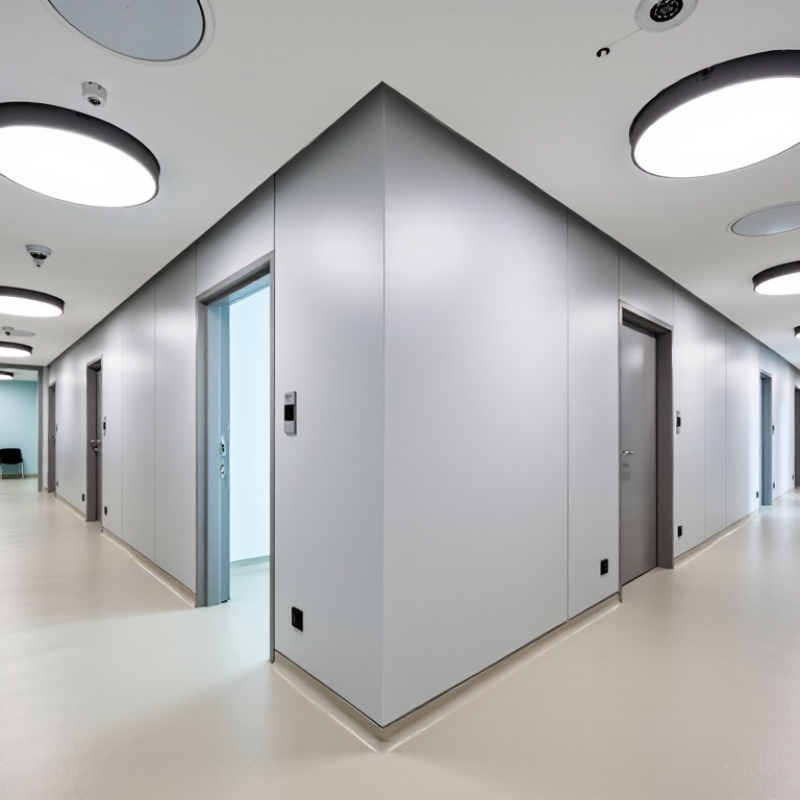
These fixtures are used in behavioral health rooms, psychiatric care areas, secure healthcare units, and some custodial settings. They may also suit observation rooms and corridors where lighting is used for long hours. A flush ceiling can make surfaces easier to clean and reduce protrusions near beds or doorways. Yet the room’s specific risks should guide every choice.
Check light levels, glare, color rendering, ceiling construction, and compatibility with cleaning products. Ask for documented impact performance and confirm that the mounting method suits the ceiling. Staff should also be able to inspect or replace components without leaving gaps. Small details matter. A harsh beam can unsettle occupants, while a dim corner may make observation harder. That trade-off deserves attention. No single downlight resolves these concerns; lighting needs to work with the room layout and care practices.
Key Safety, Lighting, and Installation Features
China Top 10 Anti Ligature LED Downlight Manufacturers
Anti-ligature LED downlights are designed for spaces where fixture shape, secure mounting, and easy cleaning matter. A smooth, flush face leaves fewer edges or gaps that could create ligature points. Check how the fitting is secured, and whether its fasteners resist tampering while still allowing authorized maintenance. No fitting removes every risk. It should support a wider, site-specific safety plan.
Lighting quality matters too. Compare output, glare control, and color temperature against the room’s use. A harsh beam can make a calm room feel clinical; uneven light can leave corners difficult to inspect. Select an ingress protection rating suited to the cleaning routine and environment, rather than assuming one rating fits every room. Fit matters.
Tips: Confirm ceiling depth, cut-out size, and driver access before ordering. Ask for installation instructions and cleaning guidance. Have a qualified professional verify compatibility with the ceiling and electrical system. One detail is easy to overlook: a secure fixture can still be poorly placed. Review its position from the bed, doorway, and staff work area, then adjust the layout if needed.
How China’s Anti-Ligature Downlight Manufacturers Are Evaluated
China Top 10 Anti Ligature LED Downlight Manufacturers
Evaluating China’s anti-ligature downlight manufacturers means looking beyond product photos and advertised wattage. Check the housing shape, bezel gaps, exposed fixings, and how securely the fitting sits in its ceiling. Request drawings, material specifications, and test reports for the exact model being offered. Small details matter. A smooth-looking edge in a catalogue may feel different after installation.
Compare light output, colour consistency, glare, and heat performance under stated test conditions. Ask how the fitting is cleaned and serviced, and whether maintenance requires special tools. Review production checks, batch traceability, and the consistency of sample units. A polished report is useful, but it cannot replace examining a physical sample; minor finish or fit differences may appear. Anti-ligature performance also depends on the room and installation, so no downlight alone can make a space safe. Seek qualified, site-specific review.
Tips: Ask suppliers to demonstrate mounting and removal using the intended ceiling materials. Keep model numbers consistent across quotations, samples, and test documents. If a measurement or claim is unclear, request the method behind it. It may slow a decision, but it can prevent a costly mismatch.
Profiles of China’s Top 10 Anti-Ligature LED Downlight Manufacturers
Profiles of China’s top ten anti-ligature LED downlight manufacturers should compare engineering evidence, not catalogue adjectives. In secure-care rooms, a smooth, flush bezel, concealed fasteners, and a firmly retained lens matter at arm’s reach. Ask for impact-test reports, ingress ratings, photometric files, and cleaning-chemical compatibility.
Details matter. A polished photograph cannot prove durability.
Each profile can record housing material, cut-out size, driver access, glare control, color rendering, and warranty terms. The U.S. Department of Energy states that LED lighting can use at least 75% less energy than incandescent lighting. This is a broad technology benchmark, not a product-level promise. Compare measured input watts and delivered lumens instead.
Manufacturer disclosures still vary, and some leave test conditions unclear. That deserves scrutiny. For a fair comparison, request independent test documents and sample units, then check that installation details match the published drawings.
How to Compare Manufacturers for Different Project Requirements
Comparing anti-ligature LED downlight manufacturers starts with the room, not the catalogue. In patient bedrooms, check flushness, tool-resistant fasteners, cleanable bezels, and gaps around the ceiling cut-out. Ask for independent impact, ingress-protection, and electrical safety test reports; a sales sheet is not equivalent evidence. Specify the mounting substrate and inspection method. Details matter. Facilities teams should also compare driver access, replacement time, dimming compatibility, and spare-part availability.
Energy claims need context. The U.S. Department of Energy’s 2019 solid-state lighting forecast projected 569 TWh in annual U.S. lighting-energy savings by 2035, compared with a no-adoption scenario. That is a national projection, not a guarantee for one ward. Use it as a reason to request measured input watts, maintained light levels, and clear lifetime assumptions—not as a product promise. Compare photometric files with the project’s illuminance and uniformity targets, then assess glare from bed height. IES RP-29-16, Lighting for Hospitals and Healthcare Facilities, offers a healthcare-specific design reference. One detail is easy to overlook: a robust fitting can still feel harsh at night. Request a mock-up in the actual ceiling and test cleaning access with facilities staff.
