

What Is Outdoor Lighting and What Types Are Available?
Outdoor Lighting is the planned use of light around homes, gardens, paths, and public spaces. It can help people see steps, find an entrance, or enjoy a patio after sunset. It also shapes how a place feels. A warm pool of light on a stone wall creates a different mood from a bright beam across a lawn. Small changes matter.
Landscape lighting designer and author Janet Lennox Moyer offers a useful perspective through her work: “Light the landscape to reveal its character, not to overpower it.” This is a paraphrase, not a verbatim quotation. The idea is practical: illuminate a path where feet actually travel, highlight a tree without washing out the whole garden, and aim fixtures carefully to reduce glare. Outdoor Lighting should serve both people and place.
Available types include pathway lights, step lights, wall lights, spotlights, floodlights, deck lights, and string lights. Each serves a different purpose, and one fixture rarely solves every need. A low path light can mark an edge, while a shielded wall light can make an entry easier to use. Solar, hardwired, and low-voltage systems also differ in installation and performance. Yet more light does not always mean better visibility. That part is easy to overlook. A thoughtful plan considers brightness, beam direction, color, and the surrounding darkness. Even a modest setup can feel welcoming when each light has a clear job. It may take adjustment; real yards rarely match a neat drawing.
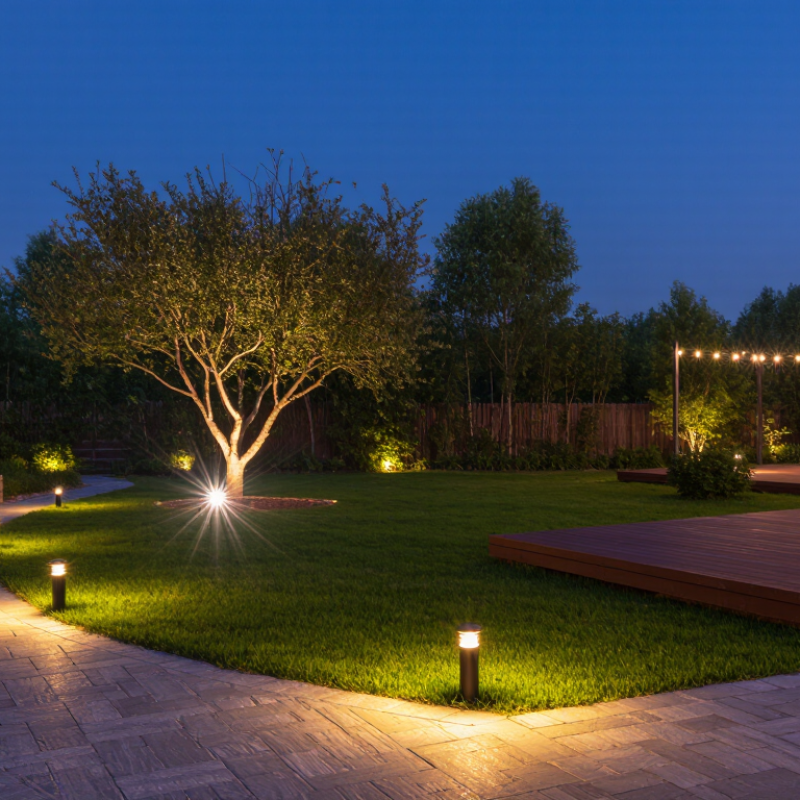
Definition and Scope of Outdoor Lighting
Outdoor lighting is the planned use of light in open-air spaces, from a front step to a highway interchange. Its scope includes luminaires, controls, mounting, and the surfaces they illuminate. The goal may be safe movement, visibility, security, recreation, or visual emphasis. Light has limits. A bright fixture can still leave a path unevenly lit.
Common applications include street and pathway lighting, parking areas, building entrances, sports grounds, and landscape features. Each setting calls for different placement and distribution. A low bollard can guide people along a garden path, while a road fixture must illuminate a wider travel area. The work also includes controlling glare, spill onto neighboring windows, and light directed upward. CIE 150:2017, published by the International Commission on Illumination, provides guidance for limiting obtrusive light in outdoor environments.
Energy use belongs in the definition, too. The U.S. Department of Energy’s 2017 Energy Savings Forecast of Solid-State Lighting in General Illumination Applications projected potential annual savings of 569 terawatt-hours by 2035 across U.S. lighting—not outdoor lighting alone. That distinction matters. A lighting plan may meet its visibility goal yet use more light than the space needs. On paper, the layout can look complete; at night, a dark step or glaring window may tell a different story.
How Outdoor Lighting Systems Work
Outdoor lighting systems guide electricity from a power source to fixtures placed along paths, walls, gardens, or entryways. Many residential systems use a transformer to reduce household voltage for low-voltage lights. The transformer connects to a circuit and may include a timer, photocell, or both. A photocell senses falling daylight; a timer follows a schedule. That matters. Controls can save energy, but their settings may not match changing seasons.
From the transformer, insulated cable carries power to each fixture. The lamps convert electricity into light, while their housings direct the beam and protect components from weather. The total fixture load must remain within the transformer’s capacity. Long cable runs can cause voltage drop, making distant lights look dimmer. Small details count. A layout can look neat yet feel uneven when shrubs grow across a beam or a connector collects moisture. Use outdoor-rated fittings, protect connections, and check cables after landscaping work. Mains-voltage connections require appropriate expertise; consult a qualified electrician when installation involves household wiring. Test timers, clean lenses, and replace damaged seals as conditions change.
Common Types of Outdoor Lighting Fixtures
Outdoor fixtures serve different purposes, so their shape and beam matter. Wall lights beside a doorway help visitors find the entrance and see the lock. Path lights cast a low pool across walkways, while bollard lights mark wider paths or garden edges. Keep fixtures spaced to avoid bright spots followed by dark gaps. Small details matter.
Spotlights direct a narrow beam toward a tree, wall, or architectural feature. Floodlights spread light over a broader area, such as a driveway, but poor aiming can send glare into windows. Step and deck lights sit near stairs or railings, where they reveal changes in level without shining directly into someone’s eyes. Post lights add a visible glow to gates or open yard areas. The right choice depends on what people need to see, not just how a fixture looks.
Tips: Check the fixture’s outdoor rating and follow its installation instructions. Aim lights downward when practical, and test their position after dusk. Keep it subtle. I’ve found that a setup that looks balanced in daylight can feel harsh at night, so one adjustment may be needed.
| Fixture Type | Typical Locations | Main Lighting Purpose | Common Features | Selection Considerations |
|---|---|---|---|---|
| Wall sconce | Exterior walls, porches, entryways, and garages | Provides light near doors and along building walls. | Wall-mounted; may direct light upward, downward, or in both directions. | Choose a weather-rated fixture and position it to illuminate the area without shining into neighboring windows. |
| Porch or ceiling light | Covered porches, verandas, and sheltered entryways | Offers general illumination beneath a roof or overhang. | Ceiling-mounted; available as flush or hanging fixtures. | Check ceiling height, clearance, and whether the fixture is rated for the location’s exposure to moisture. |
| Path light | Garden paths, walkways, and driveway edges | Helps make walking routes easier to see after dark. | Usually a low, ground-mounted fixture with a shield or cap that directs light downward. | Space fixtures to create consistent coverage and avoid glare; keep light directed toward the path. |
| Landscape spotlight | Near trees, garden features, walls, and architectural details | Highlights a selected feature or creates an accent-lighting effect. | Often ground-mounted and adjustable, with a relatively focused beam. | Aim carefully to limit glare and unwanted light spill; use outdoor-rated connections and equipment. |
| Floodlight | Building exteriors, yards, driveways, and service areas | Illuminates a broader area for visibility or security. | Typically wall-mounted, with a wide beam; some versions include motion sensors. | Choose an appropriate beam spread and mounting position. Aiming the light downward can reduce glare and light trespass. |
| Step or stair light | Outdoor stairs, retaining walls, decks, and changes in level | Makes steps and level changes easier to distinguish. | Low-profile fixtures may be recessed into risers, walls, or deck surfaces. | Place light consistently along the route and select fixtures designed for their mounting location and exposure. |
| Deck or post light | Deck railings, fence posts, and outdoor seating areas | Provides localized, low-level illumination for outdoor living spaces. | Often mounted on posts or rails; some designs cast light downward. | Consider seating positions, mounting height, and whether the light source will be visible from the deck. |
| In-ground well light | Garden beds, beside trees, and near walls or landscape features | Creates an upward accent-lighting effect from ground level. | Recessed into the ground, typically with a protective cover and drainage requirements. | Use a fixture specifically rated for in-ground installation; follow instructions for drainage, burial depth, and load limits. |
| Post lantern | Driveway entrances, garden borders, and freestanding posts | Provides visible area lighting and can help identify an entrance or boundary. | Mounted on top of a post; commonly emits light in several directions. | Check the post and mounting requirements, and consider shielding or a downward-directed design to reduce upward light. |
| Motion-sensor security light | Entrances, garages, side yards, and other approach areas | Turns on or increases brightness when movement is detected. | Combines one or more light heads with a motion sensor and adjustable controls. | Set the detection range and direction to suit the area and reduce activation from passing traffic or unrelated movement. |
| Solar outdoor light | Paths, gardens, fences, and areas without convenient wiring | Provides localized lighting using energy collected by a solar panel. | May have an integrated solar panel, rechargeable battery, and dusk-to-dawn or motion control. | Performance depends on sunlight, season, placement, and battery condition; position the panel where it can receive adequate sun. |
Where Different Outdoor Lights Are Used
Outdoor lighting is most useful when it matches a specific task. At front doors, a downward-facing wall light helps visitors find keys and see steps without shining into nearby windows. Low, shielded path lights can mark edges and changes in level. They should guide movement, not create bright dots along the whole walkway.
Driveways and parking areas need broader, even illumination. The Federal Highway Administration’s 2012 Lighting Handbook discusses choosing roadway lighting according to road conditions and user needs. That principle applies at home, too: aim light at walking and driving surfaces, and avoid harsh glare at eye level. Security lights work best near entrances, gates, and garages, where motion can be detected and the beam can stay on the property. More light is not always better.
For patios, place fixtures over tables or cooking areas, then keep surrounding planting softly lit. Use covered fittings and aim beams downward. A 2016 study in Science Advances by Falchi and colleagues estimated that over 80% of the world’s population lives under light-polluted skies. That figure gives outdoor placement real weight: spill light affects more than appearance. Some yards still end up brighter than needed; reviewing them after dark can reveal the difference.
Key Factors in Choosing Outdoor Lighting
Outdoor lighting should solve a specific problem, not simply make a yard brighter. Start with purpose. A path needs even, low-level light, while a doorway benefits from clear illumination near the lock and steps. Walk the space after dusk and notice where shadows hide edges or glare reaches eye level. Less can be more.
Brightness, color, and placement affect comfort. A warm white tone often feels gentle around a patio, while neutral white can help reveal detail near entrances or work areas. Avoid aiming strong beams toward windows, neighboring homes, or passing drivers. For a small garden, a few well-placed fixtures may look calmer than a row of bright lights. That judgment can be subjective, so test positions before fixing them permanently.
Weather exposure and upkeep matter too. Check that each fixture is rated for its location, especially near sprinklers or open, rainy areas. Consider whether wiring, batteries, or solar charging suit the site; a shaded corner may not receive enough sun for reliable solar output. Choose durable materials and accessible bulbs or components. One easy-to-miss detail: leaves can block a light’s beam as plants grow. Review the layout after a season, and use a qualified electrician for new mains wiring.
