
How to Choose the Right Wall Light in 2026?

Choosing the right Wall Light in 2026 requires more than following fashionable shapes or smart-home trends. A successful choice must balance illumination, comfort, energy use, and the room’s daily purpose. A hallway needs safe, even guidance. A bedside Wall Light needs controlled brightness and easy reach. A bathroom fixture needs suitable moisture protection. Small details matter.

Lighting designer Randall Whitehead is often credited with saying, “Lighting is the jewelry of architecture.” The idea remains useful in 2026. A Wall Light can frame artwork, soften a hard corner, or create a welcoming glow beside an entrance. However, beauty should not replace performance. Check the light’s color rendering index, beam direction, dimming compatibility, and expected lifespan. Warm light around 2700K may suit bedrooms, while neutral tones can support kitchens and work areas.

There is no perfect checklist. Real rooms are rarely perfect. Wall color, ceiling height, furniture, and existing daylight can change the result. I would also question smart controls before assuming they improve every space. A simple switch may feel better for older users or busy family members. This guide examines practical selection methods for 2026, including LED efficiency, glare control, installation height, finishes, and maintenance. It also considers mistakes people often make, such as choosing a fixture that looks attractive online but produces harsh shadows at home. The best Wall Light is not merely visible. It quietly improves how people move, rest, read, and feel.
How to Choose the Right Wall Light in 2026?

Define Your Wall Light’s Purpose, Location, and Required Illumination

How to Choose the Right Wall Light in 2026?

Choosing a wall light starts with its purpose, not its appearance. A reading light needs focused, adjustable illumination near a chair or bed. A hallway fixture should support safe movement without creating harsh glare. Bathroom lighting demands moisture resistance and even facial illumination. Write the purpose in one sentence. This simple step prevents costly guesswork.

Location shapes comfort and performance. Mount a bedside light where its switch is reachable without leaving the bed. Place reading fixtures slightly above eye level, then check the beam from your usual seat. For mirrors, vertical lights on both sides usually reduce shadows better than one overhead fixture. Measure the wall, furniture, and walking path before drilling. I once ignored a door swing and had to relocate a perfectly attractive fixture.

Required illumination depends on the task, room size, and surface colors. Reading areas often benefit from about 300 to 500 lux, but personal eyesight varies. Use a dimmer when possible. Warm light around 2700–3000K feels restful, while neutral light can support detailed work. Check the fixture’s lumen output, beam angle, and color-rendering information. Numbers help. They do not replace standing in the room at night. A plan may look correct on paper and still feel uncomfortable beside a reflective wall.

Match Light Output, Color Temperature, and Beam Direction to the Space

How to Choose the Right Wall Light in 2026?

Wall lighting should be chosen by delivered lumens, not wattage. The U.S. Department of Energy reports that LEDs use at least 75% less energy and can last up to 25 times longer than incandescent lamps. However, efficiency does not guarantee comfort. A narrow hallway may need 300–500 lumens with a wide beam, while a reading corner often needs stronger, more focused light. These are starting points, not rules.

Color temperature changes the room’s emotional tone. Around 2700K–3000K usually suits bedrooms, lounges, and warm timber finishes. A cooler 3500K–4000K setting can improve visual clarity near mirrors, desks, or kitchen walls. The U.S. Department of Energy’s 2023 Solid-State Lighting report documents laboratory LED packages exceeding 200 lumens per watt, but package performance is not the same as fixture performance. Check the tested fixture output instead. Look for LM-79 test data when available.

Beam direction matters more than many buyers expect. Upward light can soften a ceiling and reduce harsh shadows. Downward light helps illuminate steps, artwork, or a bedside table. Adjustable beams offer flexibility, but they may expose uneven walls. I have seen this happen. A 24-degree beam can look elegant on textured plaster and unforgiving on a plain wall. Install a temporary bulb or mock-up first; the space may disagree with the specification sheet.

How to Choose the Right Wall Light in 2026? Match Light Output, Color Temperature, and Beam Direction to the Space

Space or Lighting Task Recommended Light Output Recommended Color Temperature Recommended Beam Direction Suggested Beam Angle Recommended Mounting Height Useful Features Selection Notes
Bedroom Reading Light 300–600 lumens per light 2700–3000 K Adjustable or downward-focused 25°–40° 100–120 cm above the mattress or 120–150 cm above the floor Adjustable head, dimming, high color rendering Aim the beam at the reading area without directing glare toward the pillow or the reader’s eyes.
Bedroom Ambient Lighting 400–800 lumens per light 2700–3000 K Upward, diffused, or wall-washing 60°–120° 150–180 cm above the floor Frosted diffuser, dimmer compatibility A wide, soft distribution creates a relaxed atmosphere and reduces harsh shadows.
Living Room Accent Lighting 400–900 lumens per light 2700–3000 K Upward, downward, or wall-washing 30°–60° 150–180 cm above the floor Dimming, glare control, adjustable beam Use a narrower beam for artwork and a wider beam for textured walls or general accent lighting.
Living Room General Lighting 800–1,500 lumens per light 2700–3000 K Upward and outward diffusion 90°–120° 160–190 cm above the floor High diffuser efficiency, dimming, even distribution Wall lights should supplement ceiling or floor lighting rather than carry the entire room load unless several fixtures are used.
Dining Area 500–1,000 lumens per light 2700–3000 K Indirect or downward with shielding 40°–90° 150–180 cm above the floor Dimming, glare shielding, high color rendering Warm light supports a comfortable dining atmosphere and helps food colors appear natural.
Kitchen Task Area 600–1,200 lumens per light 3000–4000 K Downward or forward toward the work surface 30°–60° 150–180 cm above the floor, positioned to avoid casting shadows Easy-clean surface, moisture resistance, high color rendering Place fixtures in front of the user’s working position where possible, not directly behind it.
Bathroom Mirror Lighting 500–1,000 lumens per light 3000–4000 K Forward and diffused; preferably on both sides of the mirror 60°–100° Eye level or approximately 150–170 cm above the floor Suitable IP rating, frosted diffuser, high color rendering Side lighting minimizes facial shadows. Select the fixture’s IP rating according to its distance from water sources and local electrical requirements.
Bathroom General Lighting 800–1,500 lumens per light 3000–4000 K Wide-angle, downward, or diffused 90°–120° 160–190 cm above the floor Moisture resistance, sealed construction, dimming where permitted Avoid exposed materials that can corrode in humid conditions and follow local bathroom installation zones.
Hallway or Corridor 300–700 lumens per light 2700–3000 K Upward, downward, or wall-washing 60°–120° 150–180 cm above the floor Low-glare diffuser, occupancy sensor, efficient LED source Use wider spacing and broad distribution to prevent bright spots and dark gaps along the circulation path.
Stairway 300–700 lumens per light 3000–4000 K Downward and across the steps 40°–90° 120–160 cm above the floor or positioned to illuminate tread surfaces Low glare, durable housing, sensor or timer control Prioritize consistent illumination of each tread and avoid direct glare when walking up or down the stairs.
Home Office 500–1,000 lumens per light 3500–4000 K Forward or downward toward the desk 30°–60° 120–160 cm above the desk or approximately 150–180 cm above the floor Adjustable arm, glare control, dimming, high color rendering Position the light to avoid reflections on screens; a high color rendering value helps distinguish printed colors accurately.
Artwork or Feature Wall 200–600 lumens per fixture 2700–3000 K Focused toward the artwork or wall surface 15°–35° Above or beside the artwork, depending on the wall layout Adjustable aiming, UV-safe LED source, glare shielding A narrow beam emphasizes a small object, while a wider beam provides more even coverage for large artwork or textured surfaces.
Outdoor Entrance 500–1,200 lumens per light 2700–3000 K or 3000–4000 K Downward, outward, or bidirectional with shielding 60°–120° 150–180 cm above the floor or centered near the door hardware Weather resistance, motion sensor, photocell, corrosion-resistant finish Choose an outdoor-rated fixture and confirm the required IP rating, voltage, and installation conditions before fitting.
Outdoor Pathway or Garden Wall 200–800 lumens per light 2700–3000 K Downward and outward with shielded distribution 90°–120° 60–120 cm above the walking surface Weather resistance, low glare, dusk-to-dawn or motion control Use only as much output as needed for safe wayfinding; excessive brightness can create glare and reduce visual comfort.
Reference notes: Lumen values are practical starting ranges for typical residential spaces. Actual requirements depend on room size, wall and ceiling reflectance, fixture efficiency, mounting height, existing daylight, and the number of fittings. Color temperature is measured in kelvins (K); lower values appear warmer and higher values appear cooler. Always follow local electrical codes and the fixture manufacturer’s installation instructions.

Select a Fixture Style, Size, and Mounting Height for Balanced Proportion

How to Choose the Right Wall Light in 2026?

Choosing a wall light begins with the room’s visual weight. A narrow hallway suits a slim, vertical fixture with a shallow projection. A wide living-room wall can support a broader shade or a pair of balanced lights. In practice, I measure the wall, nearby furniture, and door swing before selecting a style. A decorative fixture may look attractive online, yet feel oversized beside a compact console. Proportion matters more than trend.

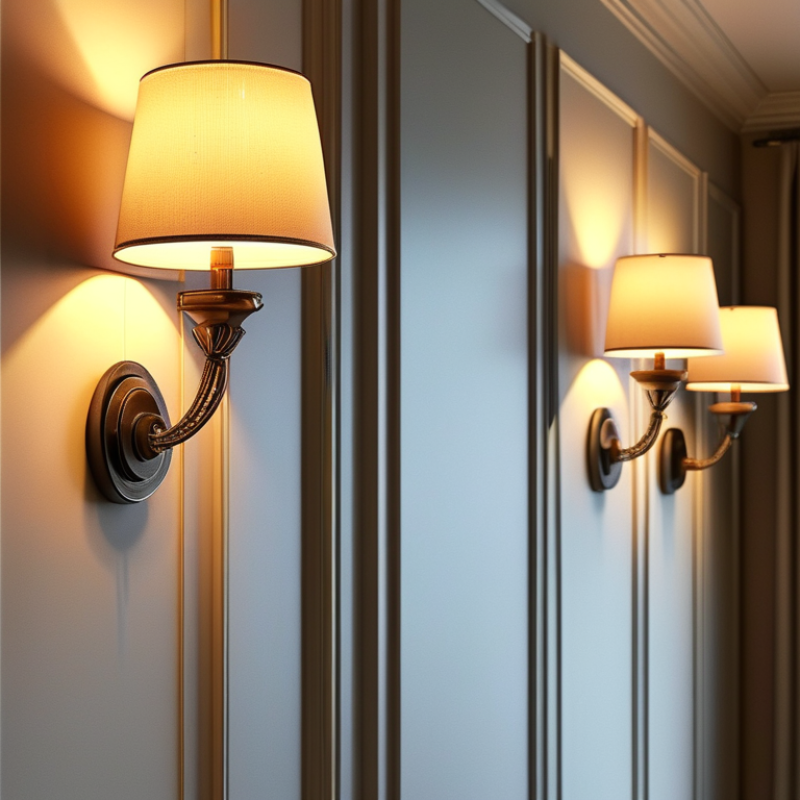
Match the fixture size to its surroundings. For a bedside light, the shade should remain close to the mattress width without dominating the headboard. For a vanity, two smaller fixtures often create more even facial lighting than one overhead fitting. Keep the center of a typical wall light around 60 to 66 inches above the floor. Adjust it for users, ceiling height, and furniture. There is no perfect number.

Mounting depth also deserves attention. Leave clear space beside doors, artwork, and walking paths. A projecting fixture can become an irritating shoulder-level obstacle. For bedside installation, place the light slightly above eye level when seated, often 20 to 30 inches above the mattress. Test the position with paper templates first. I have trusted measurements that later felt wrong. A small adjustment can improve comfort, balance, and daily usability.

Compare Bulb Types, Energy Efficiency, Controls, and Smart Features

How to Choose the Right Wall Light in 2026?

Choosing a wall light now involves more than matching its shape to a hallway. Bulb type affects heat, lifespan, colour, and running cost. The U.S. Department of Energy reports that LED bulbs use at least 75% less energy than incandescent bulbs and can last up to 25 times longer. For a reading corner, choose an LED with a high colour-rendering index, ideally 90 or above. Warm white light around 2700–3000K feels comfortable beside a bed. Cooler light can sharpen a workspace, but it may feel harsh at night.

Controls matter just as much. A dimmer can soften light after dinner, while a motion sensor can prevent a stair light glowing all night. The International Energy Agency identifies lighting as roughly 10% of global electricity demand, so small control decisions are not trivial. Still, savings depend on behaviour. A smart schedule is useless if nobody adjusts it after moving furniture or changing routines. I have found simple wall switches more reliable in busy homes.

Smart features should solve a visible problem. Look for adjustable brightness, scene settings, local control, and compatibility with your existing wiring. Check standby consumption and privacy terms before connecting the light. A 2024 U.S. Department of Energy lighting assessment also stresses that efficiency depends on the complete system, not only the bulb. A highly efficient lamp can still disappoint when glare, poor placement, or weak colour quality is ignored. Test the light at eye level. The room may tell you more than the specification sheet.

Check Safety Ratings, Installation Requirements, Durability, and Maintenance

How to Choose the Right Wall Light in 2026?

Safety should come before style. Check for a recognized electrical safety certification suitable for your country. The fixture should also state its location rating, such as dry, damp, or wet. This detail matters near bathrooms, balconies, and exposed entrances. NFPA’s Home Structure Fires report found electrical distribution and lighting equipment involved in 32% of reported home structure fires from 2016–2020. A certification mark cannot replace careful installation. It only shows that the product passed defined tests.

Measure the junction box, wall space, and cable route before purchasing. Confirm grounding requirements, voltage, wattage, and dimmer compatibility. Outdoor models need sealed joints and an appropriate IP rating. IP65, for example, offers stronger dust and water-jet protection than basic indoor ratings. Durability also depends on heat control, finish quality, and local conditions. Coastal salt air can damage exposed metal surprisingly fast. I would not assume a higher price guarantees longer service.

Maintenance is simple, but often ignored. Turn off power before cleaning, then use a dry or slightly damp cloth. Inspect loose screws, cracked seals, darkened terminals, and flickering drivers every few months. ENERGY STAR reports that qualified LED lighting uses up to 75% less energy and lasts up to 25 times longer than incandescent lighting. Still, advertised lifetime is not a promise in every home. Poor ventilation, unstable voltage, and frequent switching can shorten it. Clearance matters.