What is Extruded Aluminum T Slot and Its Applications?
Extruded Aluminum T Slot is a versatile building material widely used in various industries. Its unique shape and design enable easy assembly and customization. This innovation provides a robust framework for projects ranging from workstations to machine guards.
Industries appreciate extruded aluminum T slot for its lightweight nature and strength. It offers great adaptability. Rapid design changes can be made without the need for specialized tools. Yet, one must consider the limitations in certain structural applications. Misapplications can lead to instability. Proper engineering and planning are essential for success.
The popularity of extruded aluminum T slot continues to rise. Increasing demands for modularity and flexibility drive its usage. However, users may overlook the need for proper alignment during installation. Achieving optimal performance depends on attention to detail. This material is a fantastic solution, yet it requires thoughtful implementation.
What is Extruded Aluminum T Slot?
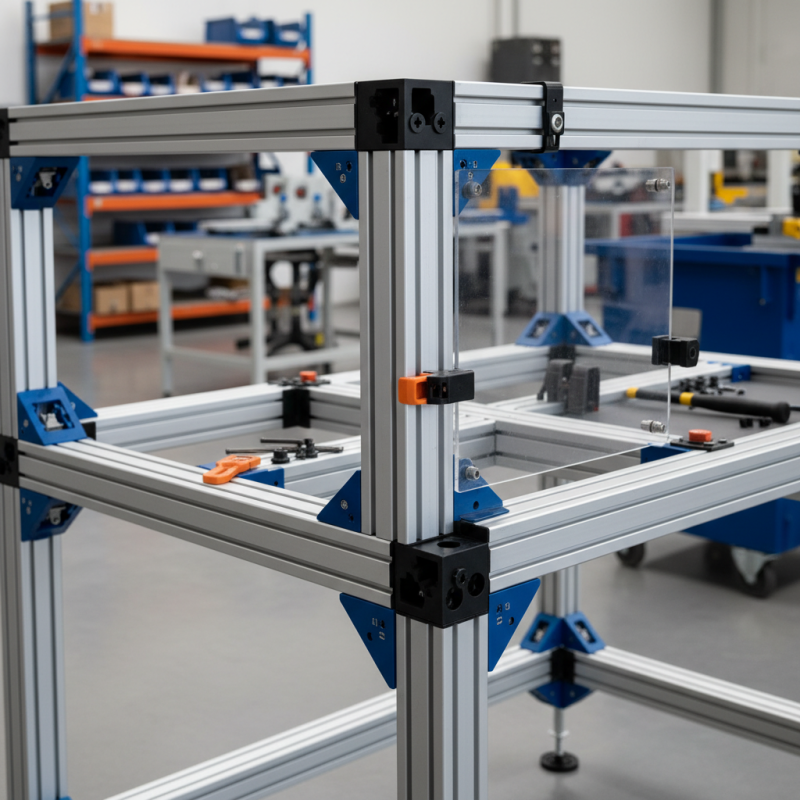
Extruded aluminum T-slot is a versatile framing system made from lightweight aluminum. It features a unique T-shaped profile, allowing for easy assembly and customization. The T-slots accommodate various connectors, brackets, and fasteners. This makes it ideal for creating modular structures and frameworks.
In industrial settings, extruded aluminum T-slot is often used for workstations, enclosures, and conveyor systems. Its adaptability supports a wide range of applications. Additionally, it stands out due to its corrosion resistance and structural integrity. However, proper installation and design are crucial for optimal performance.
Many users report challenges when determining the right configurations for their projects. Considerations such as load capacity and alignment can complicate matters. It is essential to take time assessing specific requirements. This thorough approach ensures that the final structure meets safety and functionality standards.
Extruded Aluminum T Slot Applications and Popularity
The Manufacturing Process of Extruded Aluminum T Slots
The manufacturing process of extruded aluminum T slots begins with aluminum billets. These are heated and pushed through a shaped die to create versatile profiles. The high temperatures ensure the aluminum flows smoothly, forming the T-shaped slots that are crucial for structural applications.
Once extruded, the aluminum is cooled and cut to the desired lengths. Surface treatments may also be applied, such as anodizing, to enhance durability and appearance. Understanding these processes is key for both manufacturers and users, as it impacts the strength and flexibility of the final product.
Tips: Always consider the specific requirements of your project. Different profiles suit various applications. Additionally, ensure that your selected T slots have a reliable finish. A poor surface treatment can lead to corrosion over time. Don't overlook the importance of quality when choosing materials; it can significantly affect performance and longevity.
Key Features and Benefits of T Slot Aluminum Profiles
T-slot aluminum profiles offer a versatile solution for various industries. They are lightweight yet durable, making them ideal for structural applications. Various studies highlight that the global aluminum market is expected to grow significantly, indicating a rising demand for such materials. The versatility of T-slot designs allows for easy customization, enabling users to modify structures as needed.
One of the key benefits of T-slot aluminum profiles is their ease of assembly. Fasteners can be inserted at any point along the slot. This feature minimizes the need for specialized tools, streamlining the construction process. According to the Aluminum Association, T-slot systems can reduce assembly time by up to 50%, significantly improving efficiency.
Furthermore, these profiles are environmentally friendly. Aluminum is recyclable and reduces waste in manufacturing. However, manufacturers must acknowledge that not all aluminum systems are created equal. Some may not meet rigorous industry standards, leading to potential failures in structural integrity. As demands for energy efficiency rise, exploring high-quality T-slot aluminum profiles remains crucial for sustainable engineering solutions.
Common Applications of Extruded Aluminum T Slots
Extruded aluminum T slots have become essential in various industries. Their versatility makes them useful in numerous applications. One significant area of use is in machine framing. T slots allow for quick assembly and disassembly of machine structures. This flexibility helps manufacturers adapt to changing needs. It enables them to scale production easily, which is critical in today's fast-paced environment.
Another common application is in the construction of workstations. T slots create modular setups, allowing for personalized workstation designs. Users can adjust the layout according to their preferences. Additionally, T slots are popular in robotics. They help create custom frames for robotic arms and mobile units. This adaptability can lead to improved efficiency and productivity.
However, some may overlook the importance of precision in assembly. Inaccurate measurements can lead to instability in the structure.
T slots are also utilized in display setups. They provide an elegant solution for trade shows and retail spaces. Their ease of customization allows businesses to create engaging displays. However, the challenge lies in ensuring proper load management. Overloading can compromise the integrity of the T slot system. Careful consideration is necessary to avoid potential failures.
Comparative Analysis with Other Framing Systems
Extruded aluminum T-slot framing systems stand out due to their versatility and efficiency. Compared to traditional framing methods like steel or wood, T-slot designs are lightweight yet robust. This allows for easier assembly and disassembly, making them ideal for dynamic environments. Users often highlight the modularity of these systems, as they can easily adapt to changing needs. This flexibility might come with a steeper learning curve for new users who are not familiar with the assembly process.
In contrast with other framing systems, extruded aluminum T-slots exhibit superior customization. Steel frames, while strong, can be cumbersome and difficult to modify. Wood framing offers aesthetic appeal but lacks the strength-to-weight ratio that aluminum provides. Some users feel that wood is less reliable in certain industrial applications. They seek efficient solutions without sacrificing strength or durability. Yet, some experienced builders note that aluminum may not suit all aesthetic or design preferences.
Ultimately, the choice of framing system depends on specific application requirements. While T-slot systems are widely praised for their functionality, they might not be the best fit for every scenario. Users emphasize the importance of identifying project needs before deciding on the framing material.