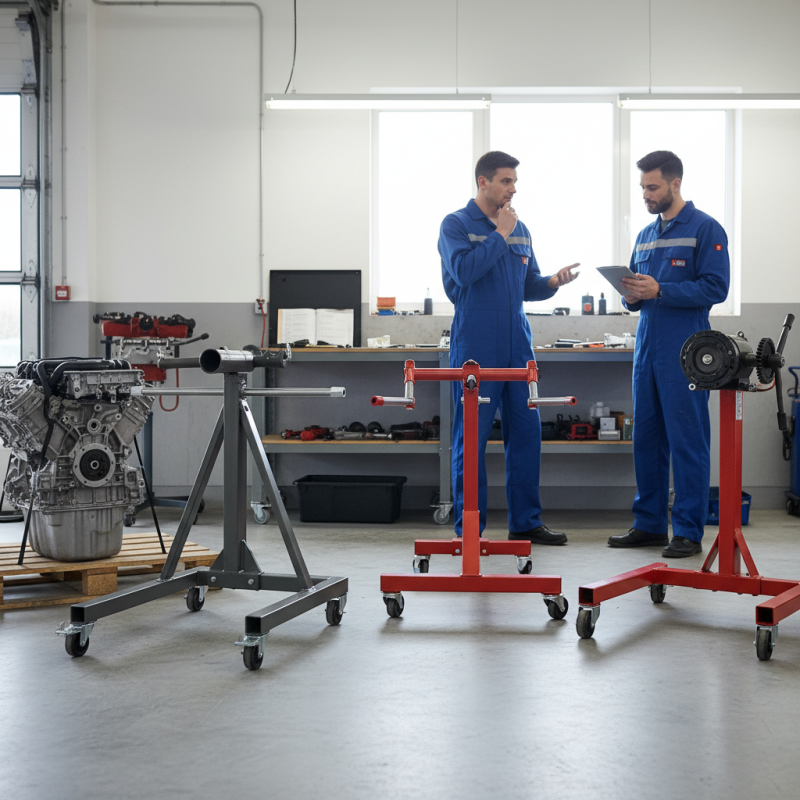
How to Choose the Best Car Engine Stand for Your Needs?
Choosing the right car engine stand is vital for any automotive enthusiast or professional. A suitable stand ensures safety and efficiency while working on engines. Many factors come into play when selecting the best option for your needs.
A car engine stand provides stability during repairs and maintenance. Look for weight capacity and durability when evaluating models. Some stands may be too light or poorly constructed, leading to potential hazards. It's essential to consider the size and types of engines you will be working with.
Don't overlook features like adjustable arms and ease of mobility. A few stands might be hard to maneuver or difficult to set up. Always read reviews and seek feedback from fellow mechanics. The right choice can make all the difference in your engine work experience.
Understanding Engine Stand Specifications: Load Capacity and Dimensions
When selecting an engine stand, understanding load capacity and dimensions is crucial. A typical stand supports weights ranging from 1,000 to 2,500 pounds. If you're working with higher-performance engines, consider models with a 2,000-pound capacity. This extra support ensures safety and stability during repairs.
It’s essential to examine the dimensions of the engine stand. Standard heights range from 30 to 50 inches. This range allows flexibility for different working environments. Choose a stand that fits your workspace without compromising accessibility. Some reports indicate that proper dimensions can affect the ergonomic setup during engine repairs.
Notably, engine stands may have dimensions that restrict movement. This limitation can lead to frustration during use. Ensuring the size is compatible with your engine's specifications is vital. Many users find themselves wishing they had opted for a larger or adjustable model. Ultimately, understanding these specifications can guide you in making the right choice.
Load Capacity of Engine Stands
Factors to Consider: Engine Weight and Balance for Optimal Stability
When selecting a car engine stand, understanding engine weight and balance is crucial. Most car engines range from 300 to 800 pounds. A stand should have the appropriate weight capacity to handle this. A stand rated for at least 1,000 pounds is advisable, ensuring stability while you work. Some models may appear robust but lack proper balance, leading to risks.
Tip: Always verify the stand’s weight limit before purchasing. Check customer reviews for real-world performance insights. Remember, balance is key. An imbalanced engine can tip over, risking injury or damage. The center of gravity varies among engines, so a stand that allows for adjustment can be beneficial.
Consider the height of the engine stand. Too low might strain your back, while too high can lead to instability. Look for stands with adjustable heights. Additionally, research shows that a solid base significantly reduces the risk of tipping. An effective stand maintains stability and supports optimal working conditions.
Tip: Determine the engine's center of gravity before making a decision. Proper positioning aids balance and enhances safety. Investing in a high-quality engine stand is essential, as it protects both your engine and yourself. Don't overlook the price, but prioritize safety and functionality above all.
How to Choose the Best Car Engine Stand for Your Needs? - Factors to Consider: Engine Weight and Balance for Optimal Stability
| Engine Stand Model | Weight Capacity (lbs) | Adjustable Height (inches) | Material | Weight (lbs) | Price ($) |
| Heavy-Duty Stand A | 1500 | 30-45 | Steel | 100 | 250 |
| Compact Stand B | 1000 | 25-35 | Aluminum | 60 | 180 |
| Tilt Stand C | 2000 | 32-48 | Steel | 110 | 320 |
| Foldable Stand D | 1200 | 28-38 | Aluminum | 65 | 150 |
Material Types and Durability: Steel vs. Aluminum Engine Stands
When choosing an engine stand, consider the material. Steel and aluminum are two common options. Steel is strong and durable. It can support heavy engines with ease. However, it is also heavier and may rust if not cared for properly. Aluminum stands are lighter and corrosion-resistant. This makes them easier to move around. But, they may not hold as much weight as steel stands.
Tips: Think about the weight of your engine. If you have a large engine, steel may be better. For smaller engines, aluminum could be sufficient.
Durability is key. Steel stands often last longer but require maintenance. Aluminum stands are low maintenance, yet they can bend under heavy loads. Users sometimes overlook wear and tear. Regular checks can prevent accidents.
Tips: Look for adjustable arms. They add versatility for various engine sizes. Ensure stability; a wobbly stand can cause dangerous spills. Always prioritize safety in the workshop while working with heavy machinery.
Key Features: Adjustable Height and Mobility Options for Convenience
When choosing a car engine stand, adjustable height is crucial. A recent industry report highlights that most workshops prefer stands with a height range of 30 to 50 inches. This feature allows mechanics to customize their working environment. It minimizes strain on the back and improves efficiency. Adjusting the height can be done easily, which saves time.
Mobility is another key feature to consider. Engine stands with wheels enhance maneuverability. According to the latest research, around 70% of professionals recommend stands that feature lockable casters. This ensures stability while working on an engine. Easy movement can facilitate better access to tools and parts. It also reduces the risk of accidents in the workspace.
However, many stands fall short in quality. Some users report instability when wheels are fully loaded. This can be concerning for safety and productivity. It's essential to weigh these drawbacks carefully. Choosing a stand that combines height adjustability and solid mobility will ultimately enhance your work experience. Keep these factors in mind to select the best option for your needs.
Cost Analysis: Budgeting for Quality Engine Stands in Automotive Workspaces
When budgeting for a quality engine stand, consider several key factors. A good stand isn't just about the price tag. Analyze the materials and construction. A well-built stand offers durability and safety. Many budget options may lack stability, leading to potential accidents. This could result in costly repairs or injuries. Sometimes, it’s better to invest a bit more for peace of mind.
Compare features and weight capacities too. Some stands may seem affordable but do not support larger engines effectively. This oversight can lead to frustrations down the line. Think through your workspace as well. Limited space can make a bulky stand cumbersome. A compact design may cost a bit more but simplify your workflow. Remember, the right stand can enhance efficiency while performing maintenance tasks, saving you time and money overall. Don't overlook these details when making a choice.