
2026 Top LED Lighting System Types for Global Buyers?

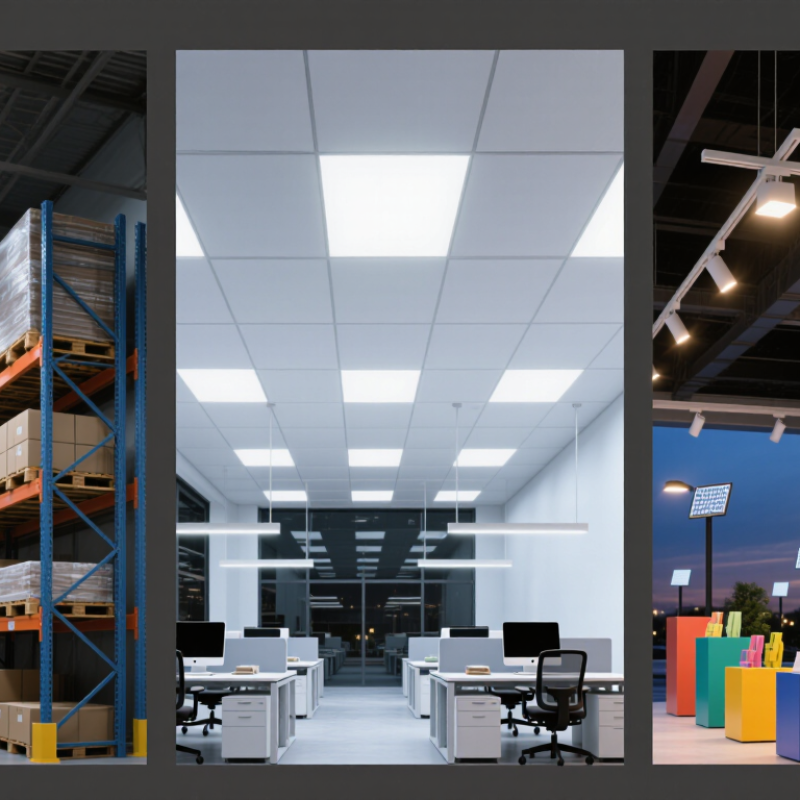
Choosing a Led Lighting System in 2026 is not just a matter of comparing wattage or fixture prices. Global buyers must match each system to its space, operating hours, installation conditions, and maintenance capacity. A warehouse with high ceilings may need high-bay fixtures, while an office often benefits from panels or linear lights. Retailers may prefer track lighting for adjustable displays. Different spaces, different demands.

This guide introduces the main LED lighting system types and the details that shape a practical purchase. It looks at luminous efficacy, color temperature, beam angle, dimming, and control options, alongside protection ratings for dust and moisture. For outdoor projects, pole-mounted and solar-integrated systems may also deserve consideration. Small details matter. A beam that looks even in a showroom can create glare on a production floor.

Buyers should also check input voltage, driver compatibility, warranty terms, spare-part availability, and applicable product requirements in the destination market. These points can vary by project and location, so specifications need careful verification with suppliers and qualified professionals. A low upfront price may not mean a lower lifetime cost. Nor does a premium fixture automatically suit every site. That sounds tidy. It rarely is. The sections ahead compare common system types, their best-fit applications, and the trade-offs buyers should assess before requesting a quotation.
2026 Top LED Lighting System Types for Global Buyers?

What Defines an LED Lighting System?

2026 Top LED Lighting System Types for Global Buyers?

What Defines an LED Lighting System?

An LED lighting system is a coordinated set of components that produces, directs, and controls light for a specific space. It typically includes LED modules, a driver, optical elements, thermal management, wiring, and mounting hardware. Controls may add dimming, occupancy sensing, or scheduled operation.

A chip is only the starting point. Not the whole system.

The parts must work together under real operating conditions. A driver affects power delivery and dimming behavior, while lenses or reflectors shape light across a desk, aisle, or loading area. Heat management matters too: a compact fixture above a warm ceiling may perform differently from one in open air.

That distinction matters.

When comparing systems, buyers can check measured light output, color quality, beam distribution, power use, and compatibility with their controls. Installation details matter as well, including mounting, ambient temperature, and access for maintenance. A specification sheet is useful, but it cannot show every condition on site. I would not call the system boundary perfectly tidy; some projects treat controls or building wiring as separate, while others include them. The intended task and installation context make the definition practical.

Which LED Lighting System Types Are Common in 2026?

In 2026, common LED lighting systems include replacement lamps, linear fixtures, panel lights, high-bay units, outdoor floodlights, and connected lighting controls. Offices often use flat panels or linear fixtures to spread light across desks. Warehouses favor high-bay systems, where mounting height and beam angle matter. Small details matter. The U.S. Department of Energy reports that LEDs use at least 75% less energy and can last up to 25 times longer than incandescent lighting. The International Energy Agency estimates that lighting uses about 15% of global electricity.

Choosing a system depends on ceiling height, task, operating hours, and existing wiring. A bright fixture can still create glare on a glossy work surface. In corridors, linear fixtures may provide more even coverage than isolated downlights. Outdoor projects often need carefully aimed optics to reduce wasted spill light. Connected systems add dimming and scheduling, but controls need commissioning and staff training. This step is sometimes overlooked.

Tips: Compare light output, color temperature, glare ratings, and compatibility—not wattage alone. Test one room or aisle before ordering for the full site. Check maintenance access, too; a hard-to-reach fixture can make routine replacement less practical.

How Do LED Systems Differ by Application and Control?

2026 Top LED Lighting System Types for Global Buyers?

How Do LED Systems Differ by Application and Control?

A warehouse high-bay system must illuminate tall racks and loading aisles, while an office system needs even light across desks and screens. Roadway LEDs prioritize visibility, weather resistance, and controlled light distribution. Greenhouse systems may need adjustable spectra and schedules. The fixture is only part of the choice. Optics, mounting height, dimming range, and operating hours matter too.

Controls shape how each system performs. Occupancy sensors can switch off lights in storage rooms, but may frustrate workers if the timeout is too short. Daylight sensors can dim perimeter fixtures beside windows. In open offices, addressable controls can set different zones without switching an entire floor. Keep it practical. Lawrence Berkeley National Laboratory’s meta-analysis of commercial-building studies reported average lighting-energy savings of 24% for occupancy controls, 28% for daylighting controls, and 38% for combined strategies. Results depend on layout, setup, and use.

For buyers, check whether drivers support the required dimming protocol and whether sensors can be commissioned after installation. Ask for photometric files and test a sample space at the actual mounting height. A corridor may need simple scheduling; a classroom may benefit from occupancy and daylight response. Complex controls are not automatically better. If staff cannot understand the settings, energy savings may not last.

Which Standards and Compatibility Factors Matter Globally?

For global buyers, compliance starts with the destination market, not the fixture’s sales description. Check applicable safety and performance standards, such as relevant IEC or regional requirements, then confirm which local approvals are required. A conformity mark in one market does not automatically establish acceptance in another. Request test reports and certificates tied to the exact product configuration.

Electrical compatibility is equally practical. Confirm input voltage and frequency, then verify that the LED driver matches the site supply. A fixture designed for 220–240 V may not suit a 120 V installation. Dimming needs checking too: 0–10 V, DALI, and phase-cut systems are not interchangeable. Small details matter. Ask for a compatibility list, not just a dimming label.

Match protection and light output to the space. An IP rating suitable for a dry office may be inadequate near washdown areas or outdoor exposure. Review beam angle, color temperature, color rendering, and flicker data against the application. Photometric files can help compare layouts before purchase. Emergency lighting adds further requirements, including backup duration and local testing rules. One detail is easy to miss: controls, sensors, and replacement drivers should remain available after installation. Global projects rarely fail because of one dramatic mismatch; small assumptions often accumulate.

2026 Top LED Lighting System Types for Global Buyers

Typical nominal supply voltage by system type. Values indicate common system classes, not guaranteed product input ranges.

Compatibility checklist: Confirm local mains voltage and frequency, driver input range, AC/DC output type, connector and polarity, and dimming protocol. Relevant references include IEC 60598 for luminaires, IEC 61347 for lamp controlgear, IEC 62384 for LED controlgear performance, IEC 62386 for DALI, and IEEE 802.3 for Power over Ethernet. Check applicable national adoptions and product certifications; standards compliance alone does not guarantee interoperability.

How Can Buyers Compare LED Systems for Their Projects?

Comparing LED systems starts with the space, not the fixture label. A warehouse aisle needs different light distribution from a hotel corridor or a small office. Record ceiling height, mounting points, operating hours, and the tasks performed beneath each fitting. Then compare delivered lumens, efficacy, color temperature, and color rendering. A bright lamp can still leave dark patches. Check a layout drawing or request a sample for a real-room test.

Look beyond purchase price. Review driver access, replacement parts, warranty terms, and expected maintenance time. For damp or dusty areas, confirm the protection rating suits the actual conditions. Check dimming and sensor compatibility before ordering; similar-looking controls may not work together. Ask for photometric files and independent test details, rather than relying only on a product summary. Useful evidence. Also consider glare from screens, polished floors, or low ceilings. A spreadsheet helps, but it can create false confidence when assumptions about daily use are wrong. I would revisit those assumptions with installers and facility staff before final selection. That step may feel slow, but changing a poorly matched system later can cost more.

2026 Top LED Lighting System Types for Global Buyers? - How Can Buyers Compare LED Systems for Their Projects?

LED system type Typical project uses Indicative efficacy
(lm/W)
Common control options Main advantages Key checks before purchase
LED retrofit lamps
Replacement lamps for existing sockets
Homes, hotels, small offices, and renovation projects retaining existing fixtures About 70–120 On/off; dimming on compatible models and controls Straightforward replacement with limited changes to the existing installation Check socket and voltage compatibility, lamp dimensions, dimmer compatibility, enclosed-fixture suitability, and local safety certification.
Integrated LED luminaires
Downlights, surface lights, and general-purpose fixtures
Residential and commercial interiors, corridors, reception areas, and meeting spaces About 90–160 On/off, phase-cut, 0–10 V, DALI, or wireless, depending on the model Fixture, optics, and LED source are designed as a system; many shapes and distributions are available Compare delivered lumens, beam or distribution, glare control, color quality, driver access, dimming compatibility, and maintenance arrangements.
LED panels and troffers
Recessed or surface-mounted systems
Offices, classrooms, healthcare spaces, and other grid-ceiling interiors About 90–150 On/off, 0–10 V, DALI, or wireless, depending on the driver Broad, relatively even light distribution; common ceiling formats simplify layout planning Check ceiling dimensions, glare rating where relevant, uniformity, emergency-lighting requirements, driver access, and controls.
LED linear and trunking systems
Continuous or modular linear luminaires
Retail, warehouses, factories, circulation areas, and large open interiors About 110–180 On/off, 0–10 V, DALI, occupancy sensing, or wireless, depending on system design Modular layouts can provide continuous runs and support project-specific optics and spacing Review run lengths, suspension and joining details, light distribution, installation labor, replaceable components, and control zoning.
LED high-bay luminaires
High-mounted industrial fixtures
Warehouses, distribution centers, workshops, and high-ceiling production areas About 120–190 On/off, 0–10 V, DALI, occupancy sensors, or daylight controls High output and purpose-designed optics can suit mounting heights and aisle layouts Check mounting height, beam angle, temperature range, dust and moisture protection, impact resistance, glare, and sensor coverage.
LED roadway and area luminaires
Outdoor pole-mounted systems
Roads, car parks, campuses, public spaces, and site access routes About 100–180 Photocell, scheduled dimming, 0–10 V, DALI, or networked controls where supported Outdoor optics can direct light toward the intended area; controls can support adaptive operating schedules Evaluate local road-lighting standards, pole spacing, glare and spill light, surge protection, ingress protection, and maintenance access.
LED strip and tape-light systems
Flexible or rigid linear light sources with a driver
Cove lighting, cabinetry, shelves, signage, display cases, and architectural accents About 70–130 On/off, compatible dimmers, PWM or 0–10 V interfaces, and wireless controls, depending on the driver Flexible formats allow discreet integration and custom lengths for detail and accent lighting Confirm voltage, driver capacity, maximum run length, heat dissipation, cut points, IP rating, color consistency, and installation profile.

Note: Efficacy figures are indicative comparison ranges, not guaranteed specifications or regulatory limits. Actual performance varies with output, optics, color temperature, color rendering, driver, thermal conditions, and test method. Compare certified product data and project-specific lighting calculations; lumens per watt alone do not determine lighting quality or energy use.