2026 Best Landscape Lighting for Outdoor Spaces?
In 2026, the best Landscape Lighting will do more than brighten a patio. It will shape movement, protect dark skies, and make outdoor rooms feel naturally connected. A warm beam on textured stone can guide guests without turning the garden into a harsh showroom.
Industry evidence supports this shift. The U.S. Department of Energy’s Solid-State Lighting R&D Opportunities report identifies efficiency, smart controls, and connected systems as important lighting priorities. ENERGY STAR guidance also emphasizes efficient LEDs, appropriate brightness, and automatic controls. These details matter beside a front path, where unnecessary glare can waste energy and disturb neighbors.
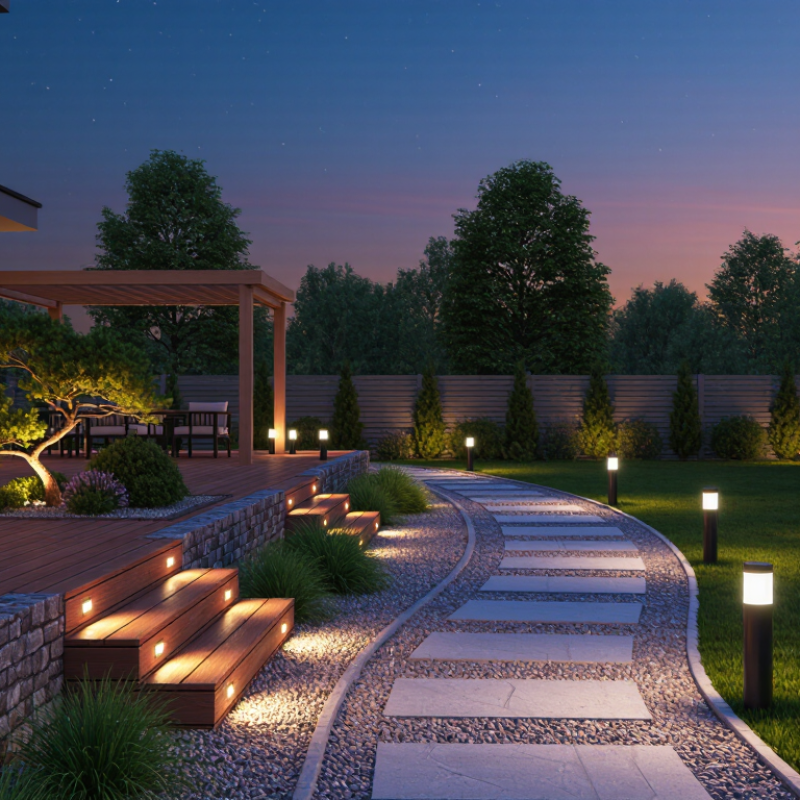
DarkSky International’s Five Principles for Responsible Outdoor Lighting recommends useful, targeted, low-level, controlled, and warm-colored illumination. That framework gives homeowners and designers a practical starting point. The best systems usually combine shielded path lights, adjustable accent fixtures, and discreet step lighting. They should reveal edges, stairs, trees, and seating areas without exposing every corner.
Small choices matter.
A 2700K fixture can soften a timber deck. A poorly aimed spotlight may shine into a bedroom window. Motion sensors, timers, and dimming can reduce overnight light, although automation is not always perfect. I have seen attractive installations lose their character through excessive brightness and inconsistent color temperature.
This guide compares the leading 2026 approaches for outdoor spaces, including solar, low-voltage, smart, and professionally designed systems. It considers durability, installation quality, energy use, maintenance, visual comfort, and long-term value. Product specifications can change, and real gardens rarely match showroom photographs. That limitation deserves attention before any purchase.
Landscape Lighting Types and Their Best Outdoor Applications
2026 Best Landscape Lighting for Outdoor Spaces?
Landscape Lighting Types and Their Best Outdoor Applications
Choosing landscape lighting starts with the outdoor task, not the fixture. Path lights guide footsteps along walkways, garden borders, and steps. Keep them low and staggered to avoid a runway effect. Spotlights highlight trees, sculptures, or architectural details. Aim them carefully, because glare can make a beautiful garden uncomfortable.
Uplights create depth beneath tree canopies and beside walls. Downlights can imitate soft moonlight from branches or roof edges. Use them over patios, seating areas, and outdoor kitchens. Wash lights spread gentle brightness across broad walls or planting beds. Well lights sit below ground and work well around trunks or façades, but drainage must be considered. Underwater fixtures suit ponds and fountains only when they meet suitable water-resistance requirements.
Color temperature changes the mood. Warm white usually supports relaxed residential spaces, while slightly cooler light can improve visibility near entrances. Low-voltage systems are common for gardens, yet safe installation still requires proper cable protection, connections, and transformer sizing. Local electrical rules should guide the work.
I have learned that brighter is rarely better. Excess light can flatten shadows, disturb neighbors, and hide the landscape’s natural texture. Even a careful layout may need adjustment after rain, seasonal growth, or furniture changes. Test fixtures at night before fixing their final positions. The first arrangement is often not the best one.
How to Evaluate Brightness, Color Temperature, and Beam Angles
2026 Best Landscape Lighting for Outdoor Spaces?
How to Evaluate Brightness, Color Temperature, and Beam Angles
Brightness should match the task, not simply maximize output. Path lights often need gentle illumination, while steps and entries require clearer visibility. Check lumens, but also examine mounting height and surface color. A pale wall reflects light strongly. Dark stone absorbs it. Test at dusk.
Color temperature changes the mood of an outdoor space. Warm light between 2200K and 3000K usually suits gardens, timber, and seating areas. Cooler light can reveal architectural details, but it may feel harsh near plants. I once used 4000K lighting beside a small patio. The scene looked clean in photographs, yet uncomfortable in person. My mistake was trusting the specification more than the setting.
Beam angle controls where the light travels. Narrow beams can highlight a tree trunk or sculpture. Wider beams spread across lawns and low planting. Avoid aiming narrow fixtures toward windows or neighboring paths. Glare becomes distracting quickly. Use a mock-up with temporary fixtures before permanent installation. Small details matter. Look for even coverage, restrained shadows, and consistent color between fixtures. A lighting plan should also record lumen output, color temperature, beam angle, and viewing distance. Recheck these details after rain or seasonal growth, because foliage can change the result.
Choosing Energy-Efficient Smart Controls for 2026
2026 Best Landscape Lighting for Outdoor Spaces?
Energy-efficient smart controls should shape your landscape lighting plan in 2026. Efficient fixtures matter, but controls determine when electricity is actually used. A daylight sensor can keep path lights off during bright evenings. Scheduling can dim garden zones after midnight. Motion detection adds light near steps, but it should avoid sudden changes that disturb neighbors or wildlife.
I recommend dividing the property into separate zones: paths, entrances, planting beds, and entertaining areas. A weather-resistant controller should support local operation, secure updates, and dependable recovery after a power interruption. Check its outdoor protection rating and place connections above standing water. Low-voltage systems still require correct transformer sizing, cable placement, and professional testing. Small errors can cause flickering or uneven brightness.
A practical test is simple. Walk the property after sunset, then again at 10 p.m. Notice glare, dark corners, and unnecessary lighting. Do not trust automation blindly. Sensors can react to headlights, rain, or moving branches. I prefer adjustable schedules and manual overrides, even when a system offers advanced features. They provide control when technology behaves imperfectly. One more concern remains: compatibility between lighting equipment and control systems can change quickly, so verify published specifications before installation.
Planning Fixture Placement for Safety, Function, and Visual Balance
2026 Best Landscape Lighting for Outdoor Spaces?
Planning Fixture Placement for Safety, Function, and Visual Balance
Good landscape lighting begins with movement, not decoration. Walk the property after sunset and note dark steps, uneven paths, and low branches. Place fixtures where people need visual guidance, especially near stairs, entrances, and changes in elevation. Path lights should be staggered rather than lined up like runway markers. This reduces glare and creates a more natural rhythm.
Use downward lighting near seating areas, but keep fixtures above eye level. A bright lamp facing a patio can make the surrounding garden disappear. For trees and textured walls, aim light carefully and test the beam from several positions. In my experience, moving one fixture by a few inches can improve balance more than adding another lamp. I once placed too many lights near a narrow walkway. The area looked safe, yet it felt harsh and crowded.
Tips: Keep light sources hidden from direct view. Use softer illumination near resting areas. Check shadows from furniture and plants. Leave room for seasonal growth.
Avoid placing every fixture at the same distance or brightness. That approach seems tidy, but it often creates flat, artificial scenery. Review the layout from inside the house, from the driveway, and while walking slowly outdoors. A reliable plan also considers weather exposure, cable protection, maintenance access, and applicable electrical requirements. When connections or power loads are uncertain, consult a qualified professional. Safety should shape the design before visual balance does.
2026 Best Landscape Lighting for Outdoor Spaces
Typical target illuminance for planning fixture placement, safety, function, and visual balance
Higher light levels are typically used where people need to identify edges, steps, or entrances. Lower levels help preserve visual comfort, reduce glare, and maintain a balanced nighttime appearance across paths, driveways, and seating areas. Values are practical residential planning targets rather than universal code requirements; verify local regulations and site conditions before installation.
Comparing Installation Methods, Durability, and Long-Term Maintenance
2026 Best Landscape Lighting for Outdoor Spaces?
Installation method often determines maintenance more than fixture style.
Plug-in low-voltage systems install quickly and suit patios or rental properties. Their exposed connectors can loosen after repeated watering and frost.
Direct-buried cable looks cleaner, but locating faults becomes difficult when roots spread.
Conduit costs more upfront, yet it protects wiring near driveways and planting beds.
Professional hardwired systems provide better control for large properties, although installation quality remains critical.
Durability depends on moisture protection, drainage, and heat management.
IEC 60529 classifies IP ratings, with IP65 resisting water jets and IP67 allowing temporary immersion. That difference matters beside sprinklers or low garden depressions.
ENERGY STAR reports that certified LED bulbs use at least 75% less energy and last up to 25 times longer than incandescent lighting. However, the whole system still includes transformers, connectors, and buried cable. One weak component can shorten practical service life.
Maintenance should include seasonal inspections, lens cleaning, connector checks, and branch trimming. The U.S. Department of Energy’s solid-state lighting research identifies thermal management as a major factor in LED performance and longevity. In practice, shaded fixtures often run cooler than tightly enclosed ones.
I once buried a connector too close to a drainage channel. It worked for months, then failed after heavy rain. I would now place every connection above the soil line or inside a rated enclosure.
Small oversights become expensive.